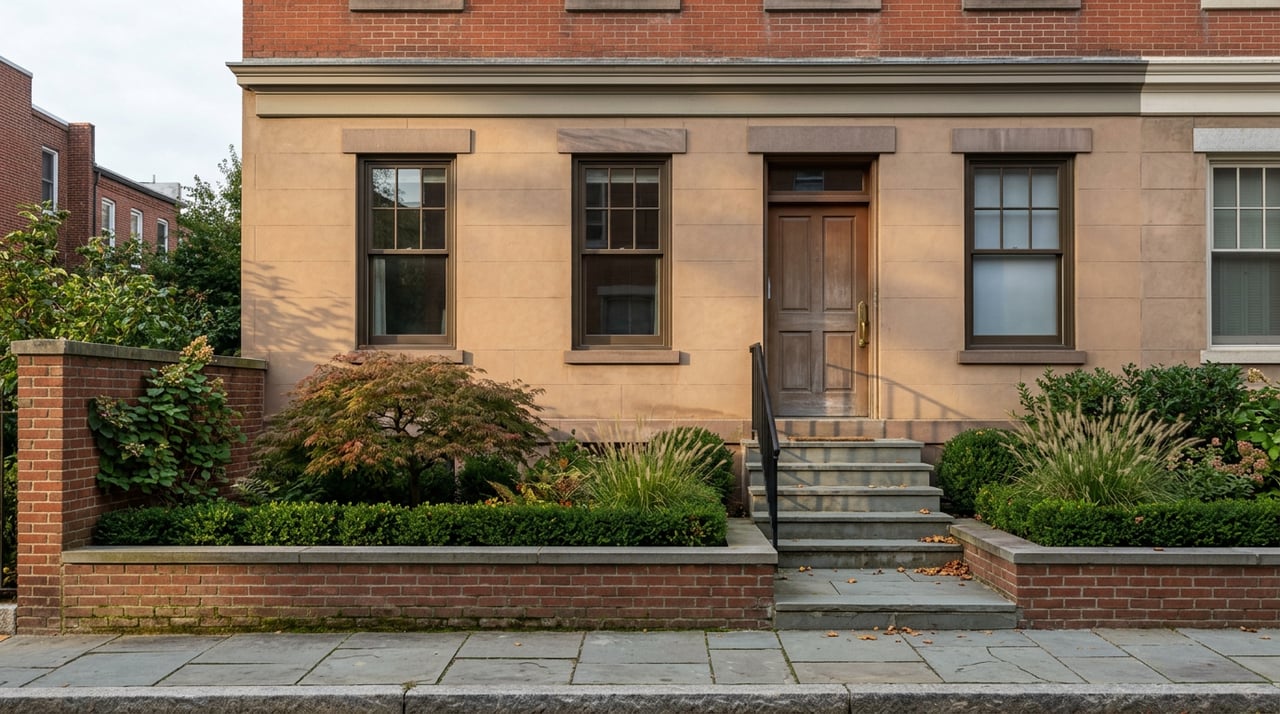
Say you fall for a brownstone off Third Place, the kind with a thirty-foot front garden and a stoop worn smooth by a century of use. You picture a rear extension someday, maybe a new set of windows up front. You assume, reasonably, that a neighborhood built around protected gardens comes with landmark rules attached. Then you find out the opposite is closer to true on that block, and the opposite again on the block one over.
Carroll Gardens has spent decades being described as a landmarked garden district. It isn't, not in the way most buyers picture it. The actual footprint of the Landmarks Preservation Commission's authority here is two blocks long, and knowing exactly where that line falls changes what a renovation costs and how long it takes before you ever pick up a hammer.
The Two Blocks That Actually Carry Landmark Status
The Carroll Gardens Historic District was designated on September 25, 1973. Its boundary is Carroll Street and President Street, running between Smith and Hoyt. That's it. The LPC's original designation report covers roughly 150 rowhouses built in the neo-Grec and Italianate styles between the 1860s and 1880s, and the official district map shows just how compact that rectangle is against the rest of the neighborhood.
Everything inside that rectangle needs Landmarks sign-off before the Department of Buildings will issue a permit for visible exterior work. Everything outside it, including plenty of blocks with the same deep front gardens the neighborhood is named for, answers to DOB alone.
The Gardens Didn't Wait for a Landmark Designation
The gardens themselves predate the 1973 district by more than a century. Surveyor Richard Butt laid out the plan in 1846, setting houses back roughly thirty feet from the street rather than flush against the sidewalk, which is why the front-yard look reads as neighborhood-wide even though the legal protection isn't.
What actually locks in that scale across the wider neighborhood is zoning, not landmarking. A 2009 rezoning put height and bulk restrictions on new construction throughout Carroll Gardens, which is why you don't see out-of-scale towers dropped onto garden blocks even outside the historic district. That zoning protects the neighborhood's shape. It says nothing about whether an existing owner needs Landmarks approval to swap out a cornice or add a rear addition. Those are two different systems solving two different problems, and conflating them is where a lot of renovation budgets go sideways.
The Decade Someone Tried to Fix the Contradiction
Preservationists have noticed the mismatch for a long time. Between 2009 and 2011, the Carroll Gardens Neighborhood Association and the Brooklyn Preservation Council pushed the Landmarks Preservation Commission to study an extension of the district, specifically because the existing boundary left out many of the garden blocks that give the neighborhood its identity. The debate got contentious, with a group called Citizens Against Landmarking arguing that wider designation would just raise renovation costs for existing homeowners without meaningful benefit.
The extension never happened. LPC's own recent activity confirms the boundary hasn't moved. When the commission designated two new Brooklyn historic districts in 2025, Beverley Square West and Ditmas Park West, Carroll Gardens wasn't part of it. The two-block footprint from 1973 is still the operative one today.
What Changes Depending On Which Side of the Line You're On
| Inside the district (Carroll & President St, Smith to Hoyt) | Everywhere else in Carroll Gardens | |
|---|---|---|
| Who reviews exterior work | Landmarks Preservation Commission, on top of DOB | Department of Buildings only |
| What can trigger review | Facade changes, windows, stoops, cornices, rear extensions or rooftop work visible from a neighbor's yard | Only work that requires a standard DOB permit |
| Typical added timeline | About 10 business days for a staff-level Certificate of No Effect, or a full hearing cycle of 3 to 6 months for a Certificate of Appropriateness | None beyond ordinary DOB review |
| Typical added cost | LPC filing preparation often runs $2,000 to $8,000, plus a facade premium in the 15 to 25 percent range for historically accurate materials | No landmark-specific cost |
| What's actually protected | Historic materials, facade details, streetscape rhythm | Height and bulk on new construction, under the 2009 rezoning |
What This Costs You If You Guess Wrong
The two-block district isn't a rubber stamp problem. Ordinary repairs, like replacing a broken window pane or repainting to match the existing color, generally don't need a permit at all. It's the bigger visible changes that split into two paths. A Certificate of No Effect covers work that needs a DOB permit but doesn't alter protected features, and it typically clears in about ten business days. A Certificate of Appropriateness is the slower path, reserved for changes that do affect protected features, and it can add a full hearing cycle of three to six months before DOB will even look at your application.
Rear extensions and roof decks get more scrutiny than most buyers expect inside the district, because visibility from a neighboring yard or upper floor still counts as public view in LPC's assessment, even though the space itself is private. That surprises people who assumed a backyard project was automatically off the commission's radar.
Outside the two blocks, none of this applies. A brownstone on Second Place or a rowhouse on Sackett Street with an equally deep front garden answers only to DOB timelines and standard permit costs. The zoning that protects the neighborhood's scale doesn't require a Certificate of Appropriateness for a window swap or a stoop repair.
How to Find Out Before You Write an Offer
Address-level accuracy matters here more than neighborhood reputation. Before you factor a renovation budget into an offer, it's worth confirming three things: whether the address sits inside the LPC's mapped boundary, what DOB filings already exist on the property, and whether any prior alterations were done without the required sign-off, since unresolved LPC or DOB history can complicate financing and future permits. LPC's applications run through its Portico portal, which is the fastest way to check filing status on a specific building rather than relying on block reputation.
We walk buyers through this same kind of verification on loft purchases in Dumbo, where legal status and permit history matter just as much as the sale price. The same discipline applies here: find out what a building's approval history actually says before you build a renovation budget around what you assume it allows.
FAQ
How do I find out if a specific Carroll Gardens address sits inside the historic district? Check the address against LPC's official district map for Carroll Gardens. If it falls within the Carroll and President Street corridor between Smith and Hoyt, exterior work needs Landmarks review in addition to a standard DOB permit.
If my block isn't landmarked, can I do whatever I want to the front of my house? No. Standard DOB code and the neighborhood's zoning still apply. What you're free of is the added Landmarks certificate process, the filing fees, and the historically accurate materials requirement that come with the two-block district.
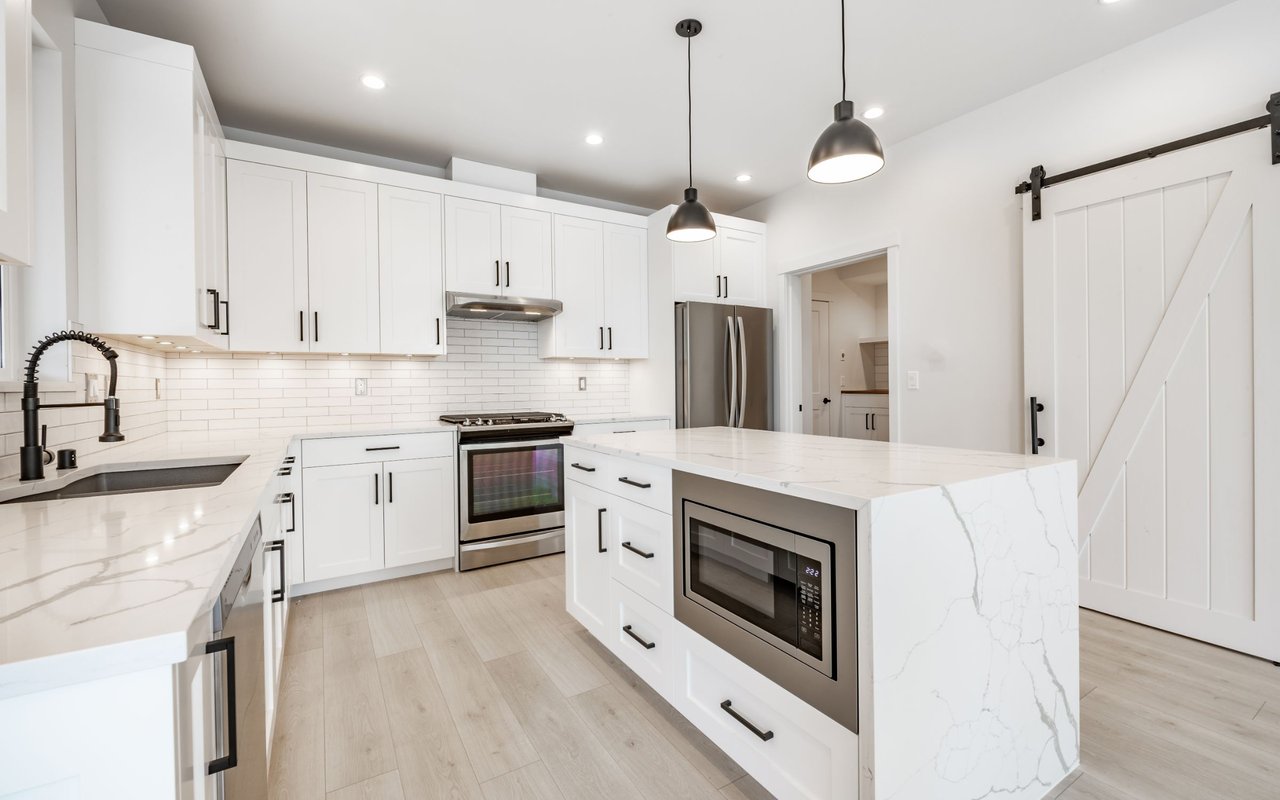
Does the historic district review apply to work you can't see from the street, like a kitchen renovation? Purely interior work generally stays outside LPC's jurisdiction. Rear extensions and rooftop additions are the exception, since visibility from a neighboring yard or upper floor still counts as public view under the commission's rules, even inside a private backyard.
A brownstone's renovation math depends on which side of a two-block line it sits on, and that's not something a listing photo or a neighborhood reputation will tell you. If you're comparing a Carroll Gardens property against options elsewhere in South Brooklyn and want a clear read on what a specific address will actually let you do, the DE Advisory Team can walk the permit history and renovation feasibility before you write an offer. Request a Home Valuation and we'll tell you what the address, not the neighborhood's reputation, actually supports.