Shopping for a Dumbo loft can feel like learning a new language. Between “true loft,” “mezzanine,” “warehouse conversion,” and “raw space,” a lot of listing copy sounds exciting but hides important details about comfort, renovation cost, and long-term value. If you understand what those words really mean, you can spot the winners fast and avoid painful surprises. This guide gives you a clear playbook to decode Dumbo loft listings so you can buy with confidence. Let’s dive in.
What “loft” means in Dumbo
Dumbo began as a district of 19th and early 20th century warehouses, later transformed into high-end residential and mixed-use buildings. Many homes today sit inside converted brick or reinforced-concrete structures that retain industrial character. That history is the backbone of the area’s loft appeal.
A significant portion of Dumbo falls within a City-designated historic district. That means exterior changes like windows, facade work, and rooftop elements may require Landmarks Preservation Commission approvals. If a listing highlights “restored windows” or custom fenestration, confirm whether the work aligns with the DUMBO historic district designation and related guidance from the Historic Districts Council.
Dumbo’s conversion story also includes major developer leadership. Two Trees Management helped drive the early transformation from industrial to residential and cultural uses. You can read more background on the developer’s role in area placemaking in this Two Trees profile.
Decode listing language fast
True loft vs loft-like
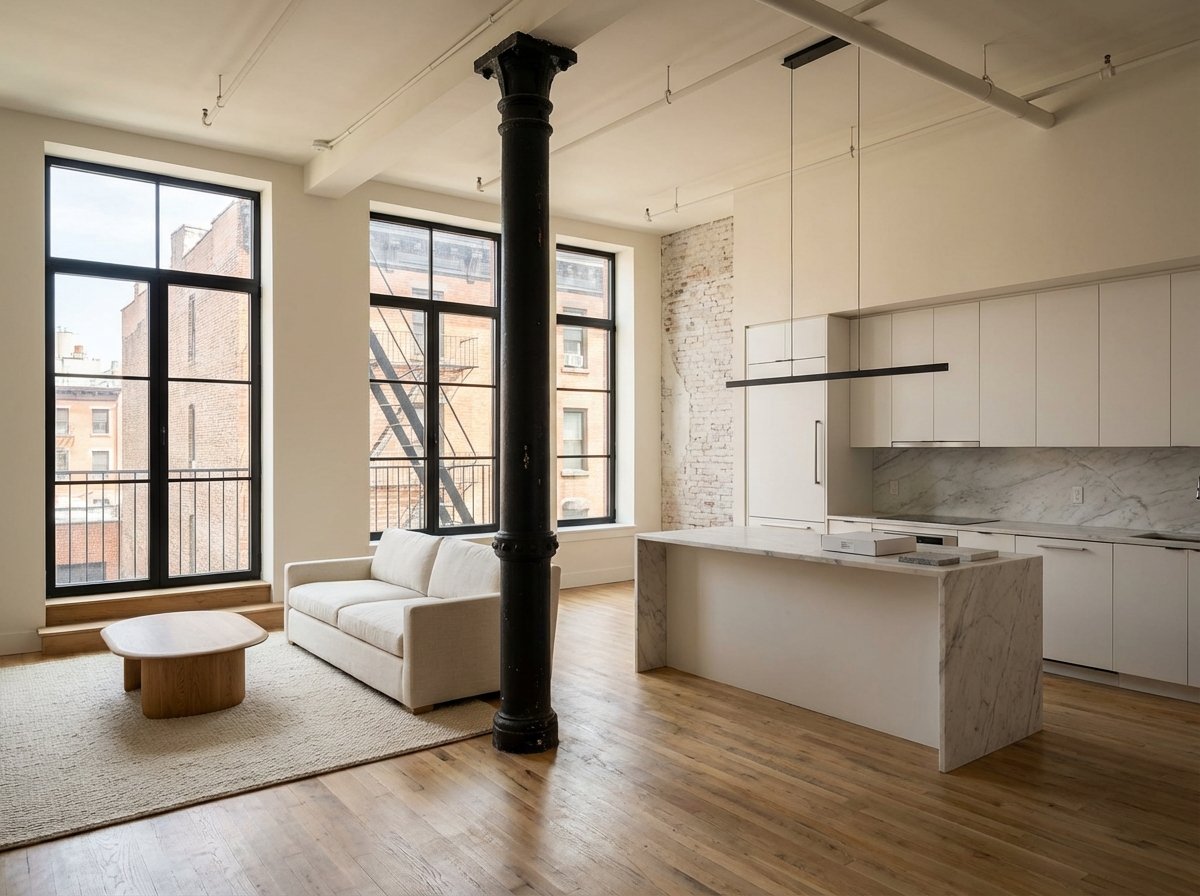
“True loft” typically means a home carved from a former industrial building with classic features like tall ceilings, big windows, and exposed structure. “Loft-like” or “manufactured loft” usually describes newer construction or fully legalized conversions that recreate the aesthetic with modern systems. If a listing claims “true loft,” verify the building’s Certificate of Occupancy and any historical Loft Law status through the NYC Loft Board.
Raw vs finished
“Raw” means you should expect meaningful renovation. Finishes may be minimal and kitchens or baths could be incomplete. A “finished” loft still might feature exposed materials but should have completed kitchens, baths, and room counts that match the Certificate of Occupancy. Always compare the listing’s bedroom or mezzanine claims to the C of O and ask the seller’s agent for documentation.
Mezzanine or lofted sleeping area
Mezzanines have specific code limits for area and headroom. Not every lofted sleep space is legal as a bedroom. Ask if the mezzanine is permitted and shown on the C of O, and how it affects egress. The Department of Buildings’ Loft Law pages explain how legalization and alterations are handled for IMD buildings and mezzanines, starting with key Loft Board guidance and DOB project requirements for IMD alterations.
Comfort and cost checks that matter
Ceiling height and clear headroom
Ceiling height drives your sense of volume, daylight, options for mezzanines, and resale appeal. NYC code generally requires at least 8 feet for habitable rooms, with 7 feet 6 inches for occupiable spaces and corridors, and certain exceptions for kitchens or baths. Many Dumbo lofts tout 12 to 18 feet, but you should confirm whether the measurement is clear height to the underside of beams or ducts. For code context, see a concise summary of minimums via BC 1208.2 references.
What to do: Ask for measured clear height in multiple spots, including under beams, soffits, and any ductwork.
Windows, exposure, and light
Oversized factory windows are a Dumbo hallmark. Still, orientation and obstructions matter more than window size. Confirm which direction the unit faces, whether windows open, and if they are single or double pane. In the historic district, window replacements may be limited, so verify whether past or proposed changes align with Landmarks oversight.
Layout flexibility and plumbing stacks
Big open plates with wide column spacing usually make re-planning easier. The tricky part is plumbing. Moving kitchens or baths away from existing vertical stacks is one of the most expensive renovation moves you can make. It often triggers structural work and formal permits. Before you dream up a new kitchen location, ask for as-built plans that show plumbing stacks and consult the DOB’s Loft Law alteration guidance.
Mechanical systems and HVAC
“Central air” is more than a comfort perk. It can influence resale, assessments, and energy use. Older conversions may use window units or ductless splits. Newer or fully legalized condos often offer central systems or individual heat pumps. Ask for documentation on any building-wide mechanical upgrades and whether Local Law compliance is scheduled that could lead to assessments.
Sound and vibration
Dumbo’s proximity to the Manhattan Bridge, ferry routes, and waterfront parks can introduce noise. Visit at different times, including rush hours and weekend evenings. Ask if windows have acoustic ratings or if the unit has sound attenuation measures like insulation or double glazing. Small upgrades here can make a big difference in day-to-day comfort.
Egress, fire protection, and legalization
If a listing mentions “Loft Law” or legalization, verify it. IMD legalization and full conversions must meet residential fire and life safety standards. Ask for Loft Board or DOB documentation that shows the building’s status and any open legalization steps. Start with the NYC Loft Board page to understand how IMD status is handled.
Ownership and financing essentials
Certificate of Occupancy must match the unit
Your lender and insurer care about what is legal, not what is advertised. Confirm that the C of O lists your unit as residential and that the room count matches the listing. Mismatches can complicate financing and closing. If the building is an IMD still in process, you may see an altered or pending C of O.
Condo, co-op, and newly converted projects
Newly converted condominiums often require project-level approvals for conventional financing. Fannie Mae’s Project Eligibility Review Service outlines how lenders review new conversions. If a building lacks approval, your loan options could narrow or require stricter terms. Read up on Fannie Mae’s PERS guidance and ask whether the project appears on approved lists.
IMD status and Loft Law
If the building once housed residential occupants informally, it might be registered as an Interim Multiple Dwelling. IMD paths can be viable, but they come with timelines, filing requirements, and building-wide obligations. Confirm status and any outstanding steps with the seller via the Loft Board and related DOB alteration requirements.
Landmarks and exterior constraints
In the historic district, exterior changes like windows or rooftop additions often need Landmarks approvals. That can affect renovation timing and cost. If a listing promotes new or restored exterior elements, confirm whether they had approval consistent with the district designation.
Red flags to catch early
- “Loft” language without any building history or C of O support.
- Ceiling heights measured to a decorative beam or dropped ceiling, not clear height.
- A mezzanine that functions as a bedroom but lacks permits or proper egress.
- “Open plan” that does not match the C of O layout.
- A newly converted condo with no reserve study or engineer’s report, which can hinder conventional financing and slow resale.
Buyer checklist for Dumbo lofts
Use this as your quick request list when you tour or prepare an offer:
- Certificate of Occupancy for the unit and building.
- Loft Board or IMD registration and current legalization status, when relevant. Start with the NYC Loft Board resource.
- Recent DOB filings, completed permits, and any open violations. Reference the DOB project requirements for Loft Law alterations.
- Recent structural engineer report and, for condos, a reserve study. Many lenders align with Fannie Mae project eligibility standards.
- Measured clear ceiling heights at multiple points, including under beams and ducts.
- As-built drawings that show plumbing stacks and major MEP risers.
- Window replacement history and any Landmarks approvals tied to the DUMBO district.
- Confirmation that the project is eligible for conventional financing per lender and Fannie Mae criteria.
- Recent photos that show window size, daylight, and any dropped ceilings or ductwork.
Renovation scope and ROI in lofts
Renovation costs vary widely by scope. Cosmetic upgrades in a raw loft can be relatively straightforward. Moving plumbing, adding new HVAC, or building legal bedrooms often requires licensed professionals and formal permits. That is where costs scale quickly.
National benchmarks indicate that midrange kitchen and bath projects tend to deliver some of the best resale ROI among interior renovations, though New York metropolitan costs usually run higher than national averages. For planning and expectation-setting, review the latest Cost vs Value benchmarks and pair them with local contractor bids based on your exact building conditions.
Market snapshot: prices shift by quarter
Pricing in Dumbo can move with inventory and mortgage rates. As one recent data point, the neighborhood saw a median sold price of about 1.67 million dollars and roughly 1,247 dollars per square foot in the 12 months ending June 2025, according to this Dumbo market report. Use this as context, then ask for a current, building-specific comp set when you get serious about a particular loft.
How we help you decode listings
You deserve more than pretty photos. You need clarity on legality, systems, renovation feasibility, and resale risk. As construction-literate, valuation-driven advisors based in Brooklyn, we help you verify ceiling heights, read C of O language, navigate Loft Board and DOB filings, and model the ROI of any planned upgrades. When you want a confident purchase with fewer surprises, partner with the DE Advisory Team to evaluate options and move decisively.
FAQs
What does “true loft” mean in Dumbo?
- A “true loft” is a residence created within a former industrial building that retains features like tall ceilings and large windows; verify the building’s Certificate of Occupancy and any Loft Law history through the NYC Loft Board.
How can I confirm a Dumbo mezzanine is legal?
- Ask whether the mezzanine is permitted, meets headroom and egress requirements, and appears on the unit’s C of O; consult the Loft Board and DOB IMD alteration guidelines.
Are window changes restricted in the Dumbo historic district?
- Many exterior changes, including windows, require Landmarks approvals in the historic district; confirm claims about restored or replaced windows against the district designation and LPC oversight.
What affects financing in newly converted loft condos?
- Lenders often require project-level approvals for new conversions; if the condo lacks approvals, conventional financing may be limited or stricter per Fannie Mae PERS guidance.
How do I assess noise near the Manhattan Bridge?
- Visit the home at different times, ask about acoustic-rated windows or soundproofing, and evaluate how exposure and window construction affect interior sound.
Which documents should I request before making an offer on a Dumbo loft?
- Start with the C of O, Loft Board or IMD status, DOB filings and permits, engineering and reserve studies, measured ceiling heights, stack locations, window history with any LPC approvals, and confirmation of conventional financing eligibility.