If you live on Staten Island’s East or South Shore, you know storms do not need a direct hit to cause stress. Surge, tides, and waves can push water where it does not belong and keep power out for days. You want practical upgrades that protect your home and support value without overcomplicating your life.
This guide covers smart, code‑aligned retrofits that perform during coastal events in Richmond County. You will learn how to prioritize elevation and mechanicals, choose flood‑resistant materials, add compliant flood vents, handle permits, and document work for insurance and resale. Let’s dive in.
Staten Island risk at a glance
Staten Island faces storm surge, tidal flooding, wave action in exposed areas, and long‑term sea level rise. Hurricane Sandy showed how fast water and waves can damage structures and utilities, especially in many East and South Shore neighborhoods.
Flood exposure varies by block. Your property may be in an AE zone, a VE wave zone, or outside mapped zones but still at risk. Your plan should reflect your site’s flood zone and Base Flood Elevation (BFE), plus freeboard to add safety.
Retrofit priorities that work here
Elevate essentials first
Start with elevation. The most reliable risk reduction is to raise the lowest habitable floor and all critical systems above the BFE plus recommended freeboard, often BFE plus 2 feet. Full house elevation on piles or a new foundation is a major project, but elevating mechanicals on platforms or shelves is a faster, lower‑cost win that can dramatically cut repair risk and support insurability.
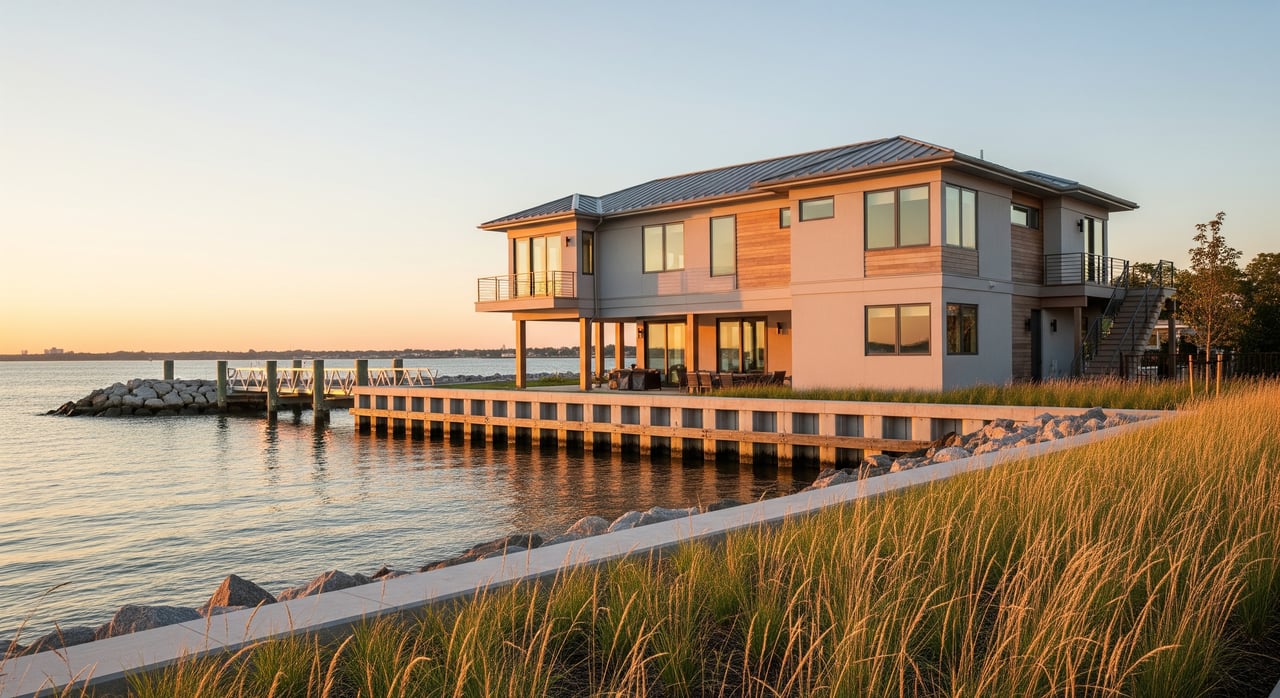
For VE zones with wave action, elevated pile or pier systems with engineered solutions and breakaway enclosures are often required by code. A licensed design professional should guide these projects.
Add compliant flood openings
If you have enclosed areas below BFE, install automatic flood openings so water can enter and exit without building pressure. Follow FEMA and National Flood Insurance Program guidance on sizing and placement. A common rule for non‑engineered openings is at least 1 square inch of opening per square foot of enclosed area, with vents on different walls and low sill heights. Use certified self‑opening vents that operate without human action. Engineered openings require documentation from a registered design professional.
Use flood‑resistant materials below BFE
Anything below the expected flood elevation should be able to get wet and dry out with minimal damage. Favor:
- Structural: reinforced concrete, concrete masonry, pressure‑treated lumber rated for wet conditions, and coated steel. Use corrosion‑resistant connectors, such as hot‑dip galvanized or stainless steel, in marine exposure.
- Exterior cladding: fiber‑cement siding, masonry, or marine‑grade composites. Avoid unprotected plywood or solid wood in splash zones.
- Interior finishes: tile or sealed concrete floors, closed‑cell foam insulation, and water‑resistant trim and fasteners. Avoid standard drywall and fiberglass batts below the flood elevation.
- Cabinets and millwork: stainless steel, plastic, or marine‑grade plywood. If installed below BFE, design them to be removable and easy to replace.
Protect utilities and power
Relocate or raise HVAC units, hot water heaters, furnaces, gas meters, and electrical panels above BFE plus freeboard. When elevation is not possible, use sealed platforms and water‑tolerant equipment where allowed. For electrical service, coordinate with your utility if you plan to move panels or meters to higher locations.
Add sump pumps with battery backup, and install backflow preventers on sewer laterals to reduce the risk of wastewater backups during storm events. Build redundancy for pump systems so you are not relying on a single device.
Wet vs dry floodproofing
Wet floodproofing allows water into non‑habitable enclosures and works with flood openings to reduce pressure. Dry floodproofing, which aims to keep water out, is less suitable for coastal residential buildings with waves and is often not allowed under NFIP rules for homes. Ask your design professional which methods apply to your structure and zone.
In VE zones, use breakaway walls for enclosures below elevated living areas so that the walls fail under flood forces while the primary structure remains intact.
Shoreline and site measures
Site‑scale improvements can complement building work. Manage stormwater by grading to direct water away from the foundation, using permeable landscaping, and sizing drains for intense rain. Shoreline changes, such as bulkheads, revetments, or living shorelines, require permits and expert design, and they can shift wave energy to neighboring sites. Coordinate early with the relevant agencies before planning any shoreline work.
Codes, permits, and professionals
Work in Richmond County must comply with the New York City Building Code. Structural changes, major mechanical and electrical work, and any elevation project require permits from the NYC Department of Buildings. Shoreline or in‑water work generally requires permits or approvals from the New York State Department of Environmental Conservation and the U.S. Army Corps of Engineers, and may include surveys and environmental review.
Use FEMA and NFIP technical bulletins for flood‑damage resistant materials and flood openings, and follow ASCE 24, which many codes reference for flood‑resistant design. These sources guide what materials and assemblies are acceptable below BFE, how to size and place vents, and how to detail enclosures in AE and VE zones.
Bring in a licensed structural engineer or registered design professional for elevation, foundation upgrades, engineered flood openings, or any VE‑zone work. Choose contractors with coastal retrofit experience who understand local inspections and documentation requirements.
Keep thorough records. Save your elevation certificate, permits, engineer letters, product data, and as‑built drawings. Good documentation can improve insurance ratings and simplifies future sales.
Insurance, credits, and value
Flood insurance pricing reflects elevation and mitigation. Raising the lowest floor and relocating mechanicals above BFE can reduce your expected loss and may lower premiums with NFIP or private flood insurers. Communities that participate in the Community Rating System can offer discounts based on local mitigation efforts. Ask your insurer how specific upgrades affect your rating, and reference your elevation certificate and any engineered measures during underwriting.
From a resale perspective, buyers pay attention to resilience. Clear evidence of elevated systems, certified flood vents, flood‑tolerant finishes, and permitted shoreline work builds confidence. Organized documentation helps you justify pricing and keeps transactions moving.
A simple planning sequence
Use this checklist to move from ideas to action:
- Know your risk
- Confirm your flood zone and BFE using current FEMA flood maps.
- If available for your area, review Advisory Base Flood Elevations.
- Consider future sea level rise and local tide records to set a sensible freeboard target.
- Prioritize by impact
- First tier: elevate or relocate mechanicals and electrical panels above BFE plus freeboard, install certified flood vents, add a backflow preventer, and install a sump pump with battery backup.
- Second tier: replace lower‑level finishes with flood‑resistant materials, upgrade to impact‑resistant and water‑tolerant doors and windows, and use durable siding with corrosion‑resistant hardware.
- Third tier: raise the structure on piles or a new foundation, and evaluate shoreline protections as permitted.
- Engage the right team
- Obtain or update your elevation certificate.
- Hire a licensed engineer for structural or VE‑zone work and for engineered openings.
- Confirm permit requirements with the NYC Department of Buildings, NYSDEC, and the U.S. Army Corps of Engineers before committing to shoreline changes.
- Specify the right materials
- Use flood‑rated, self‑opening vents with documentation.
- Select closed‑cell insulation, cement board or tile finishes, marine‑grade fasteners, and water‑tolerant assemblies below the flood line.
- Choose stainless steel or hot‑dip galvanized connectors in marine conditions.
- Document for insurance and resale
- Keep permits, approvals, elevation certificates, engineer sign‑offs, product data, warranties, and before‑and‑after photos in one place.
- Share a concise mitigation summary with your insurer and prospective buyers.
- Time projects wisely
- Complete visible, high‑impact items before listing, such as elevated equipment, certified vents, and resilient floors.
- If a full elevation is not practical before sale, price accordingly and present engineered plans or permits to show a clear path forward.
Mistakes to avoid
- Finishing living space below BFE. Keep areas below the flood line non‑habitable and easily cleanable.
- Skipping flood openings in enclosures. Without equalized pressure, walls and foundations can fail.
- Using standard drywall, fiberglass batts, or non‑marine fasteners below BFE. These materials often fail after immersion.
- Elevating equipment without secure anchorage. Platforms and units must be fastened to resist flood and wind forces.
- Starting shoreline work without permits. Unauthorized work can trigger fines and delay future approvals.
What buyers want to see
Buyers of waterfront homes focus on evidence, not promises. Make it easy to verify your upgrades:
- An elevation certificate that shows the lowest floor and mechanicals above BFE plus freeboard.
- Photos and serial tags for elevated equipment, certified flood vents, and resilient finishes.
- Permits and sign‑offs for structural, electrical, mechanical, and shoreline work.
- A simple one‑page summary of your mitigation steps and how they support insurability.
Final thoughts
You cannot control storm tracks, but you can control how your home handles water. Elevating critical systems, using flood‑ready materials, adding compliant flood openings, and documenting the work gives you practical protection and supports value. If you plan to sell, these steps can reduce buyer concerns and make pricing discussions easier.
If you want a plan tailored to your property and timing, the DE Advisory Team can coordinate pre‑sale upgrades, manage staging with a construction‑savvy lens, and help you quantify insurance and resale impacts. Request a Home Valuation and get a clear punch list that aligns with your goals.
FAQs
What is the most cost‑effective flood upgrade for Staten Island homes?
- Elevating or relocating mechanicals and electrical panels above the BFE plus freeboard, combined with certified flood vents, offers high impact with moderate disruption.
How do flood vents help in a coastal storm?
- Vents allow water to enter and exit enclosed areas below BFE, which equalizes pressure and reduces the chance of structural failure. Use automatic, self‑opening units sized per FEMA and NFIP guidance.
Are dry floodproofing systems allowed for homes in wave zones?
- Dry floodproofing is generally not appropriate for residential buildings in coastal areas with wave action and is often not allowed under NFIP rules. Wet floodproofing with breakaway walls is typical in VE zones.
Which materials hold up best below the flood line?
- Choose flood‑damage resistant materials such as reinforced concrete, fiber‑cement siding, ceramic or porcelain tile, closed‑cell insulation, and corrosion‑resistant connectors like stainless steel or hot‑dip galvanized hardware.
Do I need permits to elevate equipment or add flood vents in Richmond County?
- Structural changes and most mechanical or electrical relocations require NYC Department of Buildings permits. Shoreline work usually needs approvals from NYSDEC and the U.S. Army Corps of Engineers.
How can these upgrades affect my flood insurance premium?
- Raising the lowest floor and relocating utilities above BFE can lower expected losses and may reduce premiums. Provide your elevation certificate and mitigation documentation to your insurer for accurate rating.