Buying a home in Carroll Gardens and hearing about the mansion tax? You are not alone. Many homes here cross the million-dollar mark, which means extra transfer taxes show up in your cash-to-close. It can feel confusing, especially when you compare townhouses, condos, and co-ops.
In this guide, you will learn exactly what the NYC mansion tax is, how it stacks with other state and city transfer taxes, and how to forecast your total. You will also get practical ways to negotiate and plan ahead so there are no surprises at closing. Let’s dive in.
Mansion tax basics
The New York State mansion tax is a state surcharge that applies when your purchase price is 1,000,000 dollars or more. It is calculated as 1 percent of the total purchase price and is typically paid by you, the buyer, at closing.
Key points for Carroll Gardens buyers:
- The 1 percent rate applies once you hit 1,000,000 dollars.
- It applies to townhouses, condos, and co-ops when the consideration is at or above that threshold.
- The tax is separate from other transfer taxes and is added on top at closing.
Other transfer taxes you will see
Buying in Carroll Gardens means you should plan for three distinct taxes on most purchases above 1,000,000 dollars. These are calculated separately and added together.
- NYS basic transfer tax (RETT): 0.4 percent of the purchase price.
- NYS mansion tax: 1 percent of the purchase price when the price is 1,000,000 dollars or more.
- NYC Real Property Transfer Tax (RPTT): 1.425 percent for residential sales when the price is over 500,000 dollars. If your price is 500,000 dollars or less, the RPTT rate is lower.
Once your purchase price exceeds 500,000 dollars, the higher RPTT rate applies to the entire price, not just the amount above 500,000 dollars.
Carroll Gardens examples
Use these sample calculations to estimate transfer taxes. These examples include the three taxes above and illustrate how quickly totals add up.
Example A: 1,000,000 dollars purchase
- NYS RETT 0.4 percent: 4,000 dollars
- NYS mansion tax 1 percent: 10,000 dollars
- NYC RPTT 1.425 percent: 14,250 dollars
- Total transfer taxes: 28,250 dollars
Example B: 1,500,000 dollars purchase
- NYS RETT 0.4 percent: 6,000 dollars
- NYS mansion tax 1 percent: 15,000 dollars
- NYC RPTT 1.425 percent: 21,375 dollars
- Total transfer taxes: 42,375 dollars
Example C: 3,000,000 dollars purchase
- NYS RETT 0.4 percent: 12,000 dollars
- NYS mansion tax 1 percent: 30,000 dollars
- NYC RPTT 1.425 percent: 42,750 dollars
- Total transfer taxes: 84,750 dollars
For purchases below 1,000,000 dollars, the mansion tax does not apply. Keep in mind the RPTT still moves to the higher 1.425 percent tier once your price is over 500,000 dollars.
Townhouse, condo, or co-op
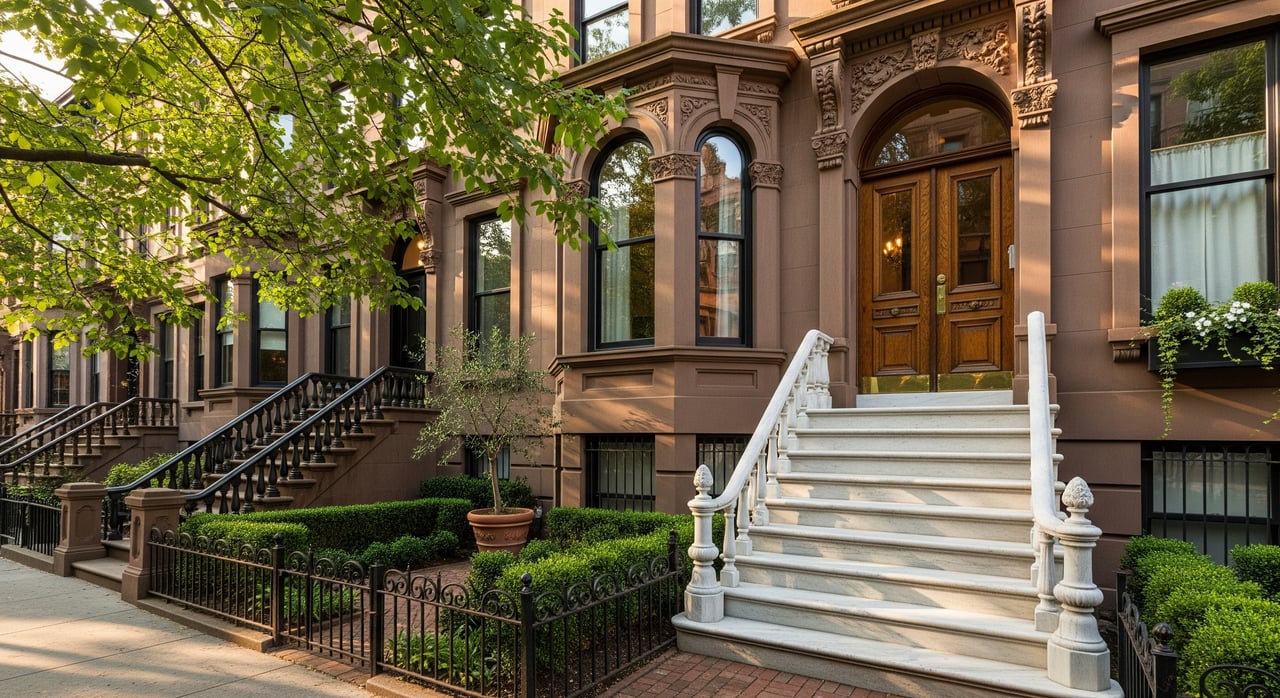
Carroll Gardens has a mix of classic brownstones, boutique condos, and well-run co-ops. Here is how the taxes usually play out by property type:
- Townhouses: Many trade above 1,000,000 dollars, so the mansion tax commonly applies. Townhouse closings can involve additional title, survey, and mortgage-related costs, so build a cushion.
- Condos: The mansion tax applies to deeded condo purchases at or above 1,000,000 dollars. You will also see the state and city transfer taxes based on price.
- Co-ops: Co-op purchases are transfers of shares, but New York State treats them as residential transfers. If the price is 1,000,000 dollars or more, the mansion tax applies. Some co-ops have flip taxes or building fees that are separate from state and city taxes. Check house rules early.
Who pays and how to negotiate
Under statute, these taxes are typically the buyer’s responsibility. In market practice, buyers usually pay them at closing. You can still negotiate.
Common levers:
- Seller concession or credit: You and the seller can agree in writing that the seller will cover part or all of the transfer taxes as a closing credit. The taxes are still due, but the seller’s proceeds fund part of the payment.
- Price reduction: Dropping the contract price below 1,000,000 dollars removes the mansion tax. This requires seller agreement and may affect your appraisal and loan amount.
- Avoid risky workarounds: Strategies that shift value to furniture or non-real property items can trigger audits and penalties. Rely on your attorney and title company for guidance.
Coordinate with your lender if you negotiate credits or price changes. Lenders underwrite to the contract price and have rules about concessions.
How to estimate your cash to close
Use this quick checklist to forecast your closing costs for a Carroll Gardens purchase.
- Start with your contract price. Note if it is below or above 1,000,000 dollars and whether it is above 500,000 dollars.
- Calculate the three transfer taxes:
- NYS RETT: 0.004 × purchase price
- NYS mansion tax: 0.01 × purchase price if price is 1,000,000 dollars or more
- NYC RPTT: 1.425 percent for residential prices over 500,000 dollars. Use the lower residential rate if you are at or below 500,000 dollars
- Add mortgage-related costs if you are financing. Mortgage recording taxes, lender fees, and escrows are separate from transfer taxes.
- Add title insurance, attorney fees, bank charges, and any building flip taxes or transfer fees.
- Ask your attorney or title company for a draft closing statement early so you can see every line item and confirm who pays what.
- Confirm with your lender if any costs can be financed or if they must be paid in cash at closing.
Rule of thumb for NYC: On purchases above 1,000,000 dollars, transfer taxes alone can add tens of thousands of dollars. Plan for additional several thousand dollars for title, legal, and lender items on top of transfer taxes.
Red flags and special cases
- Mixed-use or complex allocations: If your purchase involves both residential and commercial components or separate allocations for items like furniture, get legal and title advice. Tax treatment can change based on structure.
- Co-op flip taxes: Some buildings charge a flip tax that can be assigned to either party. This is separate from state and city transfer taxes.
- Payment and filings: Your attorney, lender, or title company typically collects and remits transfer taxes at closing. Late payment can trigger penalties and interest.
What this means for Carroll Gardens
If you are buying a Carroll Gardens townhouse or a larger condo, assume the mansion tax will apply and model the higher NYC RPTT tier. That planning helps you compare homes on a true apples-to-apples basis and negotiate with confidence. When you understand the taxes up front, you can set your budget, pick the right mortgage, and keep your deal on track.
Ready to map out your closing costs for a specific property and explore negotiation strategies that fit your goals? Connect with the DE Advisory Team for a clear, local plan from contract to keys.
FAQs
What is the NYC mansion tax for Carroll Gardens buyers?
- It is a New York State surcharge of 1 percent of the purchase price that applies when your home price is 1,000,000 dollars or more.
Does the mansion tax apply to co-op purchases in Brooklyn?
- Yes. New York State applies the mansion tax to co-op share transfers at or above 1,000,000 dollars, similar to condos and townhouses.
How is NYC RPTT calculated on homes over 500,000 dollars?
- The residential rate is 1.425 percent once your price is above 500,000 dollars and it applies to the entire price, not just the portion above the threshold.
Who usually pays mansion tax and RPTT in NYC closings?
- These taxes are typically the buyer’s responsibility under statute and are commonly paid by buyers at closing, though you can negotiate seller concessions.
Can I avoid the mansion tax by lowering the price below 1,000,000 dollars?
- Yes. Reducing the contract price below 1,000,000 dollars removes the mansion tax, but it requires seller agreement and may affect appraisal and financing.
Can I finance the mansion tax into my mortgage?
- It is usually paid in cash at closing. Some lenders may have programs or limits, so confirm with your lender early in the process.
What other closing costs should I expect besides transfer taxes?
- Plan for mortgage recording taxes if financing, title insurance, attorney fees, lender charges, prepaid escrows, and any building flip taxes or transfer fees.