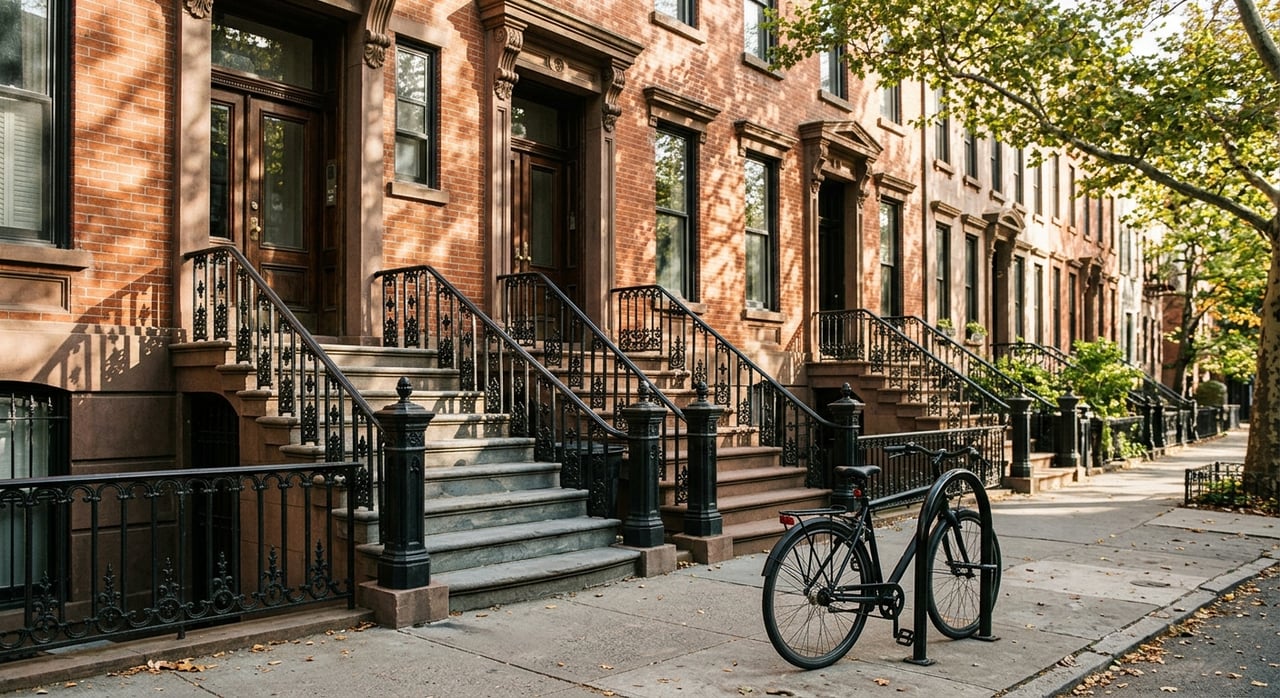
If you are wondering whether you really need a car in Cobble Hill, the short answer is often no. For many buyers and renters, the bigger question is not whether a car is necessary, but how daily life actually works without one. In Cobble Hill, the neighborhood’s compact footprint, walkable retail streets, and layered transit options make a car-free routine realistic for many households. Let’s dive in.
Why Cobble Hill Works Car-Free
Cobble Hill is small enough that many daily errands can happen on foot. One commonly used local definition from the Cobble Hill Association places the neighborhood between Atlantic Avenue, Court Street, DeGraw Street, and Hicks Street. Within that area, a lot of everyday activity is concentrated rather than spread out.
That concentration matters. When your coffee run, grocery stop, takeout options, and quick errands are clustered along a few familiar streets, you spend less time coordinating transportation and more time simply living in the neighborhood.
Court Street and Smith Street Do the Heavy Lifting
Court Street and Smith Street are the core of day-to-day convenience in Cobble Hill. Visit Brooklyn describes Court Street as the neighborhood’s main artery, lined with vintage shops, bookstores, family-run markets, and boutiques, while also noting that Smith Street adds even more to explore.
For a car-free resident, this kind of street pattern is a major advantage. Instead of planning separate trips for essentials and leisure, you can often combine them into one walk. That is part of what makes Cobble Hill feel efficient as well as charming.
NYC DOT also describes Court Street as a 1.3-mile mixed-use corridor with ground-floor commercial uses and housing above. That kind of street design tends to support a walk-first lifestyle because homes, shops, and services sit close together.
Walking Is Often the Default
In Cobble Hill, walking is not just possible. It is often the easiest choice for short trips. The neighborhood’s compact layout means many destinations are within a manageable distance, especially if you live near Court Street, Smith Street, or Atlantic Avenue.
That does not mean every block offers the exact same experience. But from a practical standpoint, the neighborhood is organized in a way that helps you rely less on a car for everyday routines.
A Neighborhood Park Adds Everyday Ease
Living car-free also depends on having places to pause close to home. Cobble Hill Park, located on Clinton Street between Verandah Place and Congress Street, adds a simple but meaningful amenity to neighborhood life.
At 0.58 acres, it is not a large regional destination, but that is not the point. It gives residents a nearby place to walk, sit, or decompress without needing to travel outside the neighborhood.
Subway Access Gives You Options
A car-free lifestyle becomes much easier when you are not dependent on a single transit stop. In and around Cobble Hill, the F and G stations at Bergen Street and Carroll Street on Smith Street provide multiple nearby subway entry points.
That flexibility is useful in real life. It gives you choices for commuting, meeting friends, running across Brooklyn, or connecting to other parts of the city without always starting from the same station.
For riders who prioritize accessibility or easier transfers, nearby hub stations also strengthen the picture. MTA lists Atlantic Av-Barclays Ctr as accessible, and Jay St-MetroTech is ADA-accessible with elevator access to all three platforms.
Bus Service Helps Fill the Gaps
Even in walkable neighborhoods, buses can make a real difference. The B57 runs along Court Street through Cobble Hill, with stops at Atlantic, Amity, Warren, Kane, DeGraw, and President.
That route can be useful for short local trips and for reaching other parts of Brooklyn without heading back underground. If you live car-free, that kind of surface transit helps create a more flexible day-to-day routine.
The Ferry Adds Another Layer
Cobble Hill residents also benefit from being near the Atlantic Ave/Brooklyn Bridge Park Pier 6 NYC Ferry landing. According to NYC Ferry, that landing includes bike racks, a covered waiting area, Citi Bike stations, and transit links to bus and subway service.
For some residents, the ferry may be an occasional option rather than a daily one. Still, it adds another route for reaching Lower Manhattan and nearby neighborhoods, which is exactly the kind of transit overlap that supports living without a car.
Biking Is Viable, With Street-by-Street Caveats
If biking is part of your plan, Cobble Hill can support it, but it helps to be realistic. NYC DOT says New York City’s bike network includes 1,550 lane miles and 555 protected bike lanes, with 99% of residents within one mile of the bicycle network.
That citywide network helps make cycling a practical part of life in Brooklyn. It gives residents another way to cover short and medium distances without depending on a car.
At the same time, not every street in Cobble Hill offers the same comfort level. NYC DOT’s June 2025 presentation on Court Street says the corridor currently has no dedicated bike infrastructure, even though about 1,000 daily cyclists are counted across the project limits.
DOT is proposing a parking-protected bike lane and other safety upgrades on Court Street. That is promising, but for now the most accurate takeaway is simple: Cobble Hill is bike-capable, but your experience will vary block by block.
What Daily Life Can Look Like
For many residents, a car-free routine in Cobble Hill is less about one perfect transit mode and more about combining several practical options. You might walk for groceries, take the subway to work, use the bus for a short trip, and occasionally use the ferry when it suits your schedule.
That layered mobility is what makes the neighborhood work. You are not forced into a single pattern, which gives you more flexibility as your workweek, social plans, or household needs change.
What Buyers Should Think About
If you are considering a move to Cobble Hill, think beyond the question of whether a building has parking. A better question is how you actually want to live day to day.
If you value being able to step out for errands, dinner, transit, and neighborhood routines without planning every trip around a vehicle, Cobble Hill offers a strong case. Its compact footprint and overlapping transportation options make that lifestyle realistic for many people.
It is also worth matching your exact block and building location to your habits. If subway access, bus convenience, or bike comfort matters most to you, small location differences inside and around the neighborhood can shape your experience.
Why This Matters in a Home Search
In a neighborhood like Cobble Hill, transportation is not just a commuting issue. It is part of how a home feels to live in. The easier it is to move through your day on foot or by transit, the more usable the neighborhood becomes.
That is why lifestyle fit matters as much as square footage. When you are buying or renting in Brooklyn, understanding how a neighborhood functions on the ground can help you choose a home that supports your routine, not just your wish list.
If you are exploring Cobble Hill and want guidance that goes beyond listing photos, DE Advisory Team can help you evaluate not just the property, but how it fits the way you want to live.
FAQs
Is Cobble Hill a good Brooklyn neighborhood for living without a car?
- Yes. Cobble Hill’s compact footprint, walkable commercial streets, and access to subway, bus, ferry, and bike options make living without a car realistic for many residents.
Which streets in Cobble Hill are most useful for car-free daily errands?
- Court Street and Smith Street are the main commercial corridors, with shops, markets, dining, and other everyday destinations that support walking for routine errands.
What subway options are closest to Cobble Hill for car-free commuting?
- Nearby options include the F and G stations at Bergen Street and Carroll Street on Smith Street, plus accessible hub stations such as Atlantic Av-Barclays Ctr and Jay St-MetroTech.
Is biking in Cobble Hill practical for residents without a car?
- Biking can be practical, but comfort varies by street. Court Street currently does not have dedicated bike infrastructure, and proposed upgrades are still in the planning stage.
Does Cobble Hill have bus service that helps with a car-free lifestyle?
- Yes. The B57 runs along Court Street with several neighborhood stops, which can help with short local trips and connections to other parts of Brooklyn.
Is there ferry access near Cobble Hill for residents who do not own a car?
- Yes. The nearby Atlantic Ave/Brooklyn Bridge Park Pier 6 landing offers NYC Ferry service along with bike racks, a covered waiting area, Citi Bike stations, and transit connections.