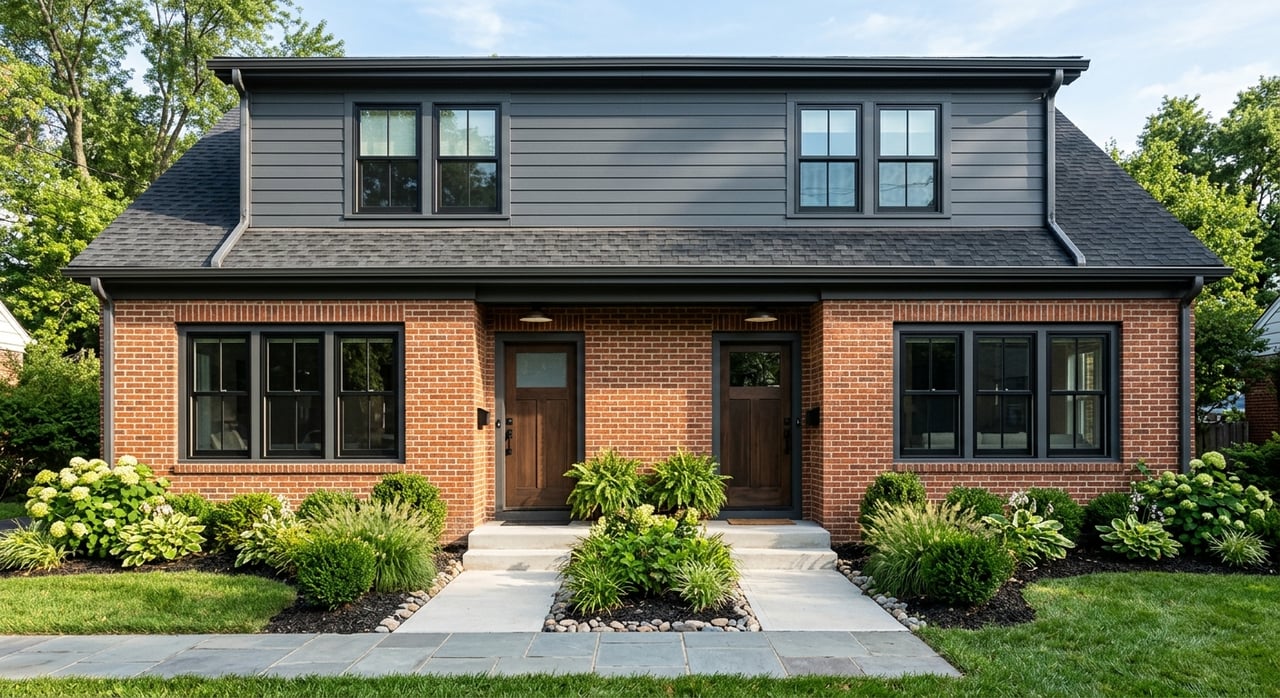
If your New York City investment strategy feels too focused on towers, condos, and dense multifamily buildings, Staten Island may offer an important counterweight. It plays by a different set of housing fundamentals than Manhattan and much of Brooklyn, which can make it useful for investors who want a more house-driven, long-hold segment in their portfolio. Below, you’ll see how Staten Island fits into a broader NYC investment plan, what the numbers suggest, and which questions matter most before you buy. Let’s dive in.
Why Staten Island Stands Apart
Staten Island is a small share of the city’s housing stock, but its structure is very different from the rest of New York City. According to the Citizens Housing and Planning Council housing stock visualization, Staten Island holds about 5% of the city’s housing units, and 83% of those units are in one- or two-family homes.
That matters because the borough does not behave like a tower-heavy market. The same CHPC data shows Manhattan is dominated by larger buildings, with 97% of units in buildings of six or more units. In practical terms, Staten Island tends to fit better into a strategy built around houses and small multifamily assets rather than large apartment-building trades.
There is also an ownership distinction worth noting. The same CHPC source notes that Staten Island is the only borough where a majority of households own their units. For investors, that supports the idea that Staten Island occupies a more ownership-oriented and house-centered place within the citywide market.
Staten Island’s Portfolio Role
For many investors, Staten Island works best as the house-style, long-hold part of a New York City portfolio. That is not a fixed rule, but it is a reasonable conclusion based on the borough’s housing mix, ownership profile, and current pricing data.
If you already own or are considering assets in Brooklyn or Manhattan, Staten Island can serve a different purpose. Instead of adding more exposure to high-rise or large-building inventory, it can add variety through smaller properties that often attract renters looking for more space.
This kind of diversification can be useful when you want your portfolio to balance different property types. In that sense, Staten Island is less about mirroring Manhattan or core Brooklyn and more about complementing them.
Property Mix Shapes Demand
One of the clearest reasons Staten Island stands apart is unit size. The 2023 NYCHVS-based CHPC data shows that only 16% of Staten Island units are studios or one-bedrooms, while more than 60% have three or more bedrooms.
That housing mix points to a different renter profile than you might see in more studio-heavy parts of the city. While no single tenant type defines the entire borough, the data suggests Staten Island is more aligned with households seeking larger unit layouts.
For investors, that changes the acquisition lens. Instead of focusing mainly on compact urban layouts, you may need to think more about bedroom count, parking, storage, and overall livability for renters who value space.
Rent Data Needs Context
When you evaluate Staten Island as an investment market, it helps to separate occupied-stock rent from active-listing rent. According to the 2023 New York City Housing and Vacancy Survey initial findings, Staten Island’s median monthly rent was $1,600, compared with $1,650 in Brooklyn and $2,148 in Manhattan.
That figure reflects the rental stock captured in the survey, not necessarily what a newly listed unit is asking today. Current listing platforms often show higher rents because they track available inventory rather than the full occupied market.
The same HPD report also shows how tight the broader city rental market remains. Citywide, the net rental vacancy rate was 1.41%, and units renting for under $1,100 had an especially low 0.39% vacancy rate. Even though those figures are citywide, they reinforce that rental supply remains constrained across New York City.
Price and Yield Versus Brooklyn and Manhattan
If you want a quick screen for how Staten Island compares with other boroughs, current listing and rent medians can help. As of March 2026, Realtor.com’s Staten Island market overview shows a median listing price of $699,999 and median rent of $2,995 per month.
By comparison, the research report notes Brooklyn at $799,000 with median rent of $4,030, and Manhattan at $1.435 million with median rent of $5,060, based on the same source family. Using those medians as a rough gross-yield screen, Staten Island comes in around 5.1%, Brooklyn around 6.1%, and Manhattan around 4.2%.
This is not a cap-rate analysis, and it should not replace property-level underwriting. Still, it is a useful directional check. Staten Island generally appears to sit between Brooklyn’s stronger current gross-yield profile and Manhattan’s higher-price, lower-yield profile.
What Operating Risk Looks Like Here
Because Staten Island is so heavily weighted toward one- and two-family homes, the management story usually looks different from a large-building investment. The borough’s housing mix suggests investors are more likely to think about roofs, façades, systems, yards, driveways, and turnover than elevators, concierge service, or large common-area budgets.
That does not mean smaller properties are maintenance-free. The 2023 NYCHVS findings report that, citywide, 7% of units in one- or two-unit buildings had three or more housing problems, compared with 14% in buildings with 100 or more units.
The takeaway is balanced. Smaller buildings can be operationally simpler in some ways, but they still need steady capital planning and hands-on oversight. If your strategy favors fewer moving parts, Staten Island may appeal to you, but only if you underwrite maintenance realistically.
Staten Island Submarkets Are Not the Same
A borough-level view is helpful, but Staten Island is not one uniform market. Current Realtor.com local market data for Staten Island’s North Shore shows median pricing around $639,000 and median rent near $2,800 per month, while the research report places the South Shore at about $750,000 and $2,950, and the East Shore at about $749,000 and $2,995.
Those differences matter when you compare opportunity, renter demand, and your target hold period. A property that looks attractive at the borough level may fit your strategy very differently once you narrow it to a specific submarket.
That is why local underwriting matters. You want to evaluate each asset based on its exact unit mix, physical condition, expected maintenance profile, and rental position within its immediate area.
Due Diligence Questions to Ask
Before you buy in Staten Island, it helps to frame the deal around a few practical questions:
- What is the actual unit type, and how does it fit the borough’s larger-unit housing mix?
- What kind of renter is the property likely to serve based on layout and space?
- How much ongoing maintenance will the home or small building require?
- Does this asset improve your portfolio balance compared with adding another property in Brooklyn or Manhattan?
These questions are especially important if you are comparing boroughs. Staten Island may not be the obvious choice for every investor, but it can make sense when you want house-style exposure, a more space-oriented rental profile, and a different price point within New York City.
The Strategic Takeaway
Staten Island is not simply a lower-cost version of Brooklyn or Manhattan. It is a structurally different part of the New York City housing market, shaped by one- and two-family homes, larger unit sizes, and a more ownership-oriented profile.
For small-to-mid-size investors, that often makes Staten Island a useful house-style, yield-sensitive, family-rental bucket within a wider portfolio. Brooklyn and Manhattan may still serve as denser, higher-price, and often more liquid parts of a strategy, but Staten Island can add a distinct layer of diversification.
If you are weighing acquisition or disposition decisions across boroughs, the right answer is rarely about headline pricing alone. It is about fit: fit with your hold period, fit with your management style, and fit with the role each asset plays in your portfolio. If you want a data-driven perspective on how a property fits your broader NYC strategy, connect with DE Advisory Team.
FAQs
What makes Staten Island different from Brooklyn and Manhattan for investors?
- Staten Island’s housing stock is much more concentrated in one- and two-family homes, which makes it behave more like a house-and-small-multifamily market than a tower-heavy market.
How do Staten Island rents compare with other NYC boroughs?
- The 2023 NYCHVS reported a median monthly rent of $1,600 in Staten Island, compared with $1,650 in Brooklyn and $2,148 in Manhattan, while current active listing data can read higher.
How should you think about Staten Island yield compared with Brooklyn and Manhattan?
- Using March 2026 median listing price and rent data as a rough gross-yield screen, Staten Island was about 5.1%, between Brooklyn at about 6.1% and Manhattan at about 4.2%.
What kind of properties are common in Staten Island for investment?
- The borough is heavily made up of one- and two-family homes, so investors often evaluate house-style and small-building opportunities rather than large apartment-building inventory.
Why do Staten Island submarkets matter in an investment strategy?
- Current pricing and rent medians vary across areas like the North Shore, South Shore, and East Shore, so each submarket can support a different investment profile and risk picture.