Choosing between a townhouse and a condo in Crown Heights can feel simple at first, until you realize the decision affects your budget, your renovation options, and how much day-to-day control you want. If you are drawn to the neighborhood’s historic blocks but also want a practical ownership experience, it helps to look past the façade and understand what you are really buying. This guide breaks down the differences so you can weigh each option with more confidence. Let’s dive in.
Why Crown Heights Makes This Choice Unique
Crown Heights has a built environment that makes both townhouses and condos a real possibility. The neighborhood spans Brooklyn Community Districts 8 and 9, and it includes several historic districts, including Crown Heights North, Crown Heights North II, and Crown Heights North III.
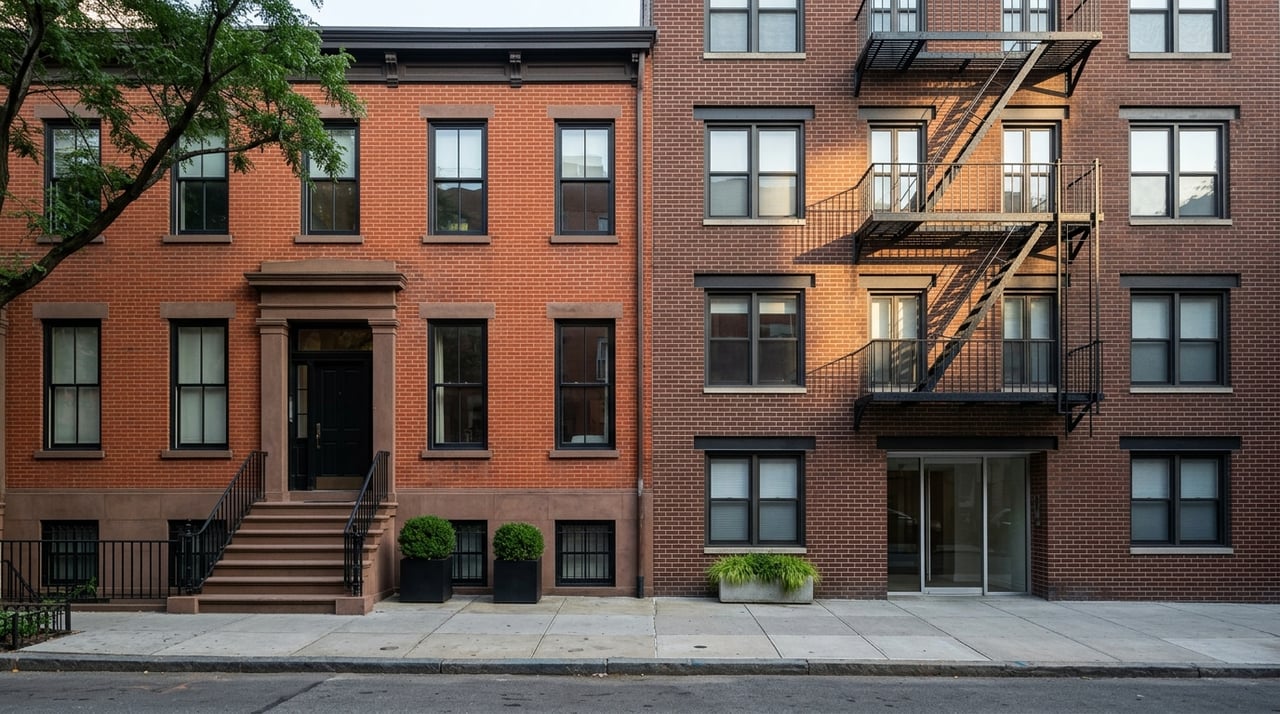
That history matters because many blocks are shaped by rowhouse and townhouse architecture dating from the mid-1800s through the 1930s. In other words, if you are shopping in Crown Heights, you are not choosing in a market made up mostly of one property type. You are often comparing very different ownership experiences on a block-by-block basis.
What You Actually Own
Townhouse ownership in Crown Heights
When you buy a townhouse, you are generally buying the whole building and the lot that comes with it. That usually means more direct control over the property, more responsibility for repairs, and more freedom to make decisions over time.
Still, in Crown Heights, ownership is not just about having your own front door. If the property sits in a historic district, exterior changes may require review by the Landmarks Preservation Commission, also known as LPC.
Condo ownership in Crown Heights
Under New York law, a condominium is a single real estate unit in a multi-unit development. As a condo owner, you own your unit plus an undivided interest in the building’s common elements.
That shared structure is important because it affects everything from monthly costs to renovation approvals. You are not only buying space inside your walls. You are also buying into a legal and financial framework that includes common areas, shared systems, and building rules.
Why the exterior can be misleading
In Crown Heights, not every townhouse-style building is legally a townhouse. The New York Attorney General notes that some townhouse-type developments include shared grounds, sidewalks, drainage systems, retaining walls, or other common elements.
That means you should never assume the legal setup just by looking at the façade. A home that looks like a classic townhouse may still function more like a shared-interest property, so reviewing the ownership structure is essential.
How Monthly Costs Compare
Townhouse costs are more direct
With a townhouse, your monthly housing cost usually feels more straightforward on paper. You may have your mortgage payment, property taxes, insurance, utilities, and then whatever repairs or maintenance come up.
The catch is that many of those costs are less predictable. If the roof needs work, the boiler needs replacement, or the exterior requires repair, you are generally handling those expenses directly.
Condo costs are more visible
With a condo, your monthly budget often includes mortgage payments, property taxes, and common charges. According to New York Attorney General guidance, offering plans are supposed to disclose estimated common charges and real estate taxes, which gives buyers a clearer picture of ongoing building-level expenses.
That visibility can make budgeting feel easier, but it does not remove risk. If the building faces major repairs, the result could be higher common charges, a special assessment, or both.
Why taxes need a closer look
In New York City, tax treatment depends on the property’s tax class. NYC Finance states that Class 1 covers most 1- to 3-unit homes and most condos of three stories or less, while Class 2 covers most other condos and primarily residential buildings.
As of tax year 2026, NYC’s published tax rates are 19.843% for Class 1 and 12.439% for Class 2. The actual bill depends on classification and assessed value, so buyers should look at the specific property rather than rely on broad assumptions.
Renovation Flexibility Matters More Than You Think
Townhouses often offer more control
One reason many buyers gravitate toward townhouses is the ability to shape the space over time. If you want to rework layouts, update systems, or plan a phased renovation, a townhouse can offer more direct control than a condo unit.
That said, more freedom does not mean no rules. Major work can still require Department of Buildings permits, and plumbing changes that alter, rearrange, relocate, or permanently remove piping must be supervised by a licensed master plumber and permitted by DOB.
Historic districts add another layer
In Crown Heights, some townhouse blocks sit inside landmarked historic districts. LPC states that landmarked buildings and buildings within historic districts require advance approval for most exterior alterations, reconstruction, demolition, or new construction affecting the designated building.
Interior work usually does not require LPC review unless it affects the exterior or requires a DOB permit. So if you are buying on a historic block, it is smart to think about your renovation goals early, especially if they involve the façade, windows, stoop, or rear addition.
Condos can mean more approval steps
Condo renovations often come with added complexity because your ownership is limited to the unit plus your share of common elements. Building declarations, bylaws, and the shared-interest structure can all affect what you can change and how the work must be approved.
In practical terms, that often means more coordination and more attention to common systems. Even if your renovation is fully inside the apartment, the building framework may still shape the timeline and process.
Hidden Costs to Watch For
Whether you buy a townhouse or a condo, older buildings in Crown Heights can come with meaningful repair exposure. The New York Attorney General specifically flags façade defects, roof repairs, plumbing and electrical upgrades, boiler replacement, and other building-wide issues as common expensive problems in existing buildings.
With a townhouse, those costs may land directly on you. With a condo, they may show up through increased common charges or a special assessment.
This is one of the biggest reasons to move beyond the listing photos. A beautiful exterior or fresh renovation does not always tell you what is happening with the systems, structure, or longer-term maintenance picture.
Which Option Fits Your Priorities
A townhouse may fit you if you want control
A townhouse often makes sense if you value privacy, direct decision-making, and the ability to customize over time. It can also fit if you are comfortable budgeting for the full range of ownership costs and understand that repairs will not be spread across a larger building.
In Crown Heights, that tradeoff can be especially important on historic blocks. You may gain more independence, but you also need to account for preservation rules if exterior work is part of your plan.
A condo may fit you if you want structure
A condo often suits buyers who are comfortable with shared ownership and monthly common charges. It can also appeal to buyers who prefer a setup where many exterior and common-area costs are managed through the building’s association framework.
For some buyers, that added structure creates a more predictable ownership experience. The tradeoff is that renovation freedom is usually narrower, and decision-making often involves more layers.
A Simple Way to Decide
If you are deciding between a townhouse and a condo in Crown Heights, focus on three questions:
- How much control do you want over the property?
- How much maintenance risk can you comfortably absorb?
- Is the home located in a historic district or a shared-interest building?
Those questions usually reveal more than square footage alone. In this neighborhood, townhouse does not automatically mean unlimited freedom, and condo does not automatically mean low-maintenance living.
Why Local Guidance Helps
In Crown Heights, the right choice is often more technical than it first appears. You may be comparing a landmarked townhouse, a condo in a small building, or a townhouse-style property with shared legal obligations that are not obvious from the curb.
That is where careful review matters. Understanding ownership structure, likely carrying costs, and renovation constraints upfront can save you from expensive surprises later.
If you are weighing a Crown Heights townhouse against a condo, working with an advisor who understands both valuation and construction scope can make the decision much clearer. The DE Advisory Team helps buyers evaluate Brooklyn properties with a practical eye toward ownership costs, renovation realities, and long-term fit.
FAQs
What is the main difference between a Crown Heights townhouse and condo?
- A townhouse usually means ownership of the whole building and lot, while a condo means ownership of one unit plus an interest in shared common elements.
Do Crown Heights townhouses always have fewer rules than condos?
- No. A townhouse in a historic district may need LPC approval for many exterior changes, and DOB permit rules can still apply to major work.
Do Crown Heights condos always cost less to maintain?
- Not necessarily. Condos may have more predictable monthly common charges, but building repairs can still lead to higher charges or special assessments.
How do property taxes work for Crown Heights townhouses and condos?
- NYC property taxes depend on the property’s tax class and assessed value, with Class 1 covering most 1- to 3-unit homes and most condos of three stories or less, and Class 2 covering most other condos.
Why should a Crown Heights buyer review the ownership structure carefully?
- Some townhouse-style developments may still include shared grounds, systems, or other common elements, so the legal structure may differ from what the building looks like from the street.