Two DUMBO one-bedrooms can list within $50,000 of each other and cost the buyer wildly different amounts to own over the next ten years. That gap is not about finishes or floor plans. It is about which side of the neighborhood's structural divide the building sits on: an older warehouse conversion carrying deferred capital work, or a full-service new development carrying its own arithmetic around amenities and phased-out tax abatements. In DUMBO more than anywhere else in South Brooklyn, the diligence that matters is building-specific, and the headline price is the least useful number in the decision.
The split the median hides
DUMBO is a condo market. Roughly 98% of active inventory in April 2026 was condo product, with 40 active listings, a $1.92M median asking price at $1,626 per square foot, and about ten months of supply on current absorption. Corcoran's 1Q 2026 read on the borough flagged DUMBO alongside Park Slope, Williamsburg, and Greenpoint as one of the pockets driving a 12% year-over-year jump in resale condo median prices, powered by a greater share of sales above $2M. The neighborhood held or gained value through the first quarter while mid-tier condo product in other Brooklyn ZIPs softened.
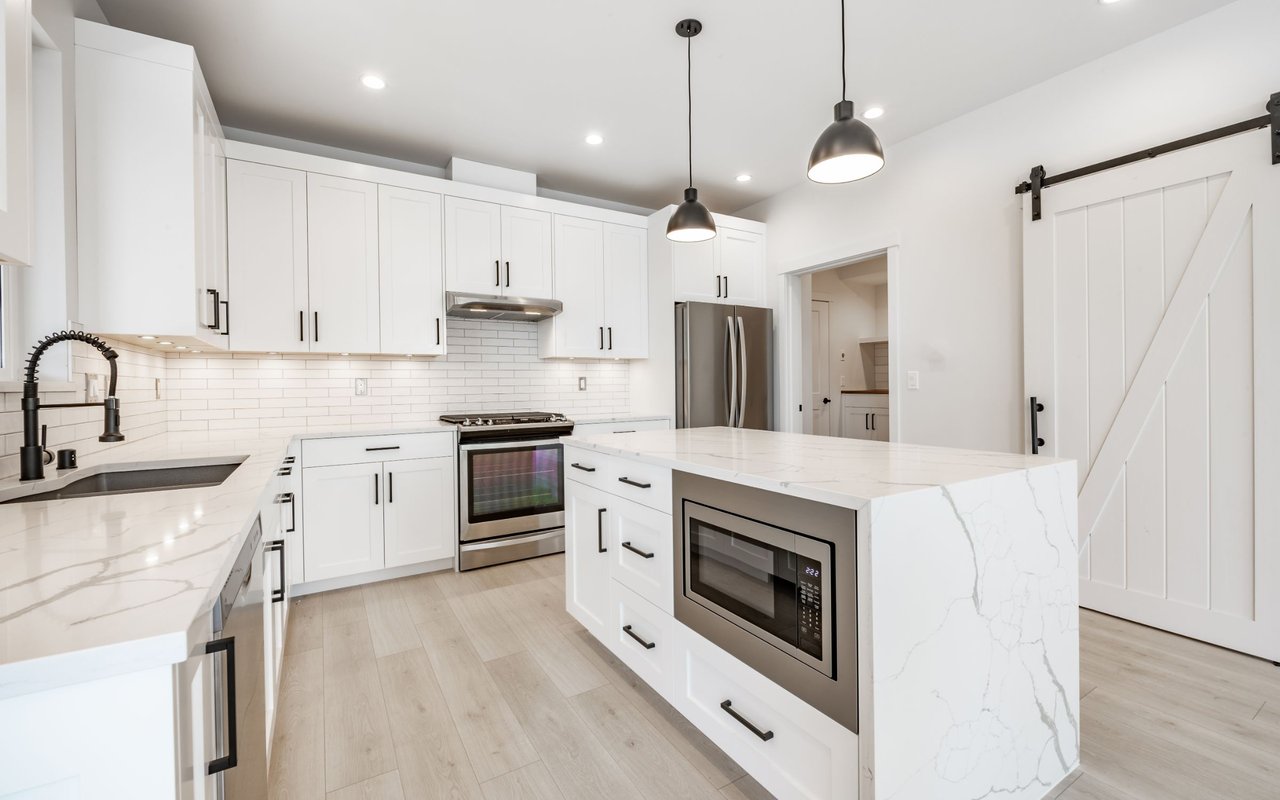
Inside that headline, though, DUMBO buyers are choosing between two very different products. On one side are the original loft conversions from the 2000-2015 wave: the Sweeney Building at 30 Main, the Clocktower at 1 Main, J Condo, 70 Washington, and Kirkman Lofts at 37 Bridge, plus more recent Alloy work like 185 Plymouth and 168 Plymouth. On the other are the purpose-built full-service towers and boutique new-dev buildings: 100 Jay, Olympia at 30 Front, Front & York, and 98 Front. Same neighborhood, same views in some cases, and completely different carrying-cost mechanics.
Where a "cheap" loft gets expensive
Older conversions in DUMBO tend to advertise lower monthly common charges than the newer towers. That is real, and for a certain buyer it is the right trade. What the sticker fee does not tell you is how the building funds capital work when it comes due.
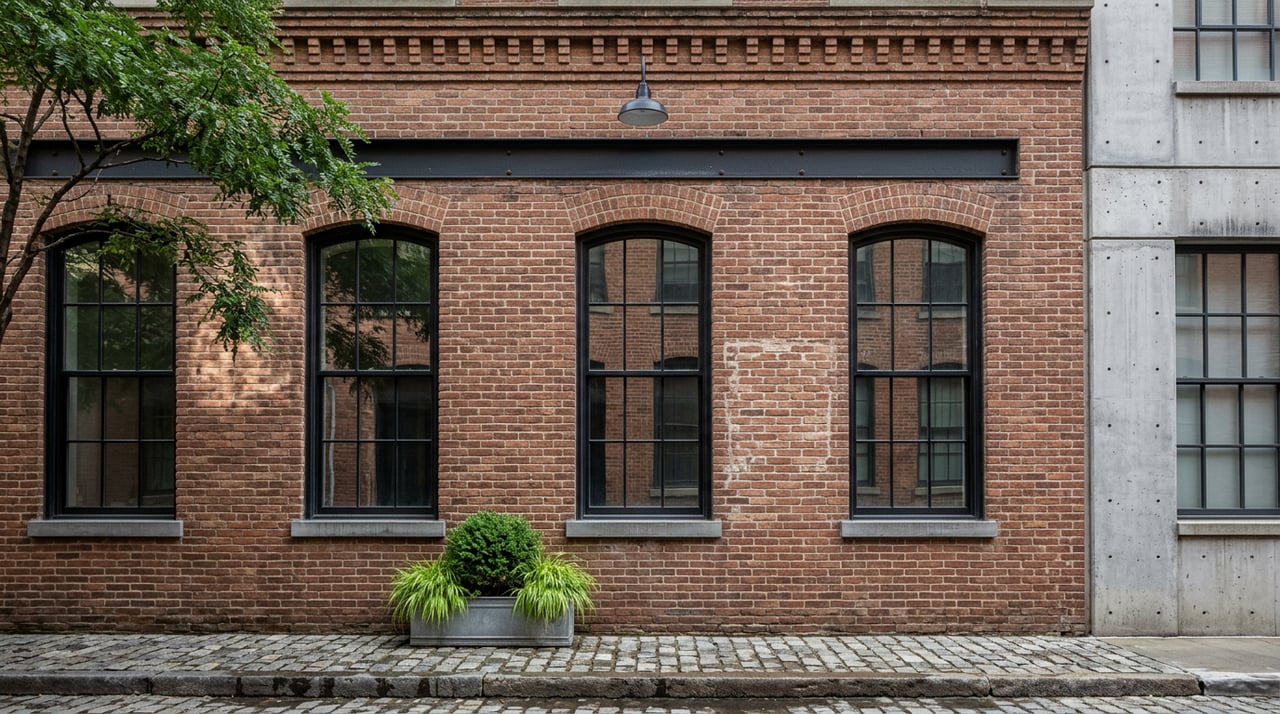
Warehouse conversions are, by definition, adaptive reuse of buildings that predate modern residential systems. The Sweeney Building went up in 1908 as a metal kitchenware factory and was converted to 85 condos by Two Trees in 2000. Kirkman Lofts is a 1915 soap factory converted in 2012. These buildings have older envelopes, roofs, mechanicals, and elevators than a 2020-era tower, and their reserve studies have to plan for the next facade repointing, parapet repair, or elevator modernization on that schedule. When those projects hit and reserves fall short, the delta usually gets bridged through a special assessment rather than baked into a higher monthly.
That is the friction most first-time DUMBO buyers miss. A unit at 30 Main was listed in early 2022 with common charges of $1,524, monthly taxes of $1,043, and a separate assessment of $155.06 a month running through that year. The assessment is the tell. Ask about the last two, and any active or planned upcoming.
Diligence on a conversion should specifically pull:
- The last two to three years of building budgets and the most recent reserve study
- The last twenty-four months of board minutes, read for facade, roof, elevator, and boiler discussion
- A complete history of special assessments over the last five years, with the reason for each
- The residential Certificate of Occupancy and any Loft Law history if the building was ever an interim multiple dwelling
- Current insurance coverage and any pending claims
If the reserve study is more than three years stale or the building has never commissioned one, that alone changes the price you should be willing to pay.
What the new-dev monthly is really paying for
Full-service new construction inverts the math. The common charge at a building like 100 Jay or Olympia is higher on day one because the budget is carrying full-time doorman coverage, concierge, a gym, a residents' lounge, sometimes a pool, and a maintenance staff that keeps things running without owner intervention. Those budgets are also more standardized because everything in the building is roughly the same age and on a predictable replacement schedule. That structure reduces the chance of a surprise capital call in years three through ten, though it does not eliminate it.
The trade a new-dev buyer is making is predictability for a higher fixed monthly. If two units carry a $600 monthly delta in common charges, that is $7,200 a year, and over a ten-year hold that is $72,000 before you account for annual increases. The question is not which number is smaller. It is which risk profile the buyer would rather own: a lower monthly with periodic assessment exposure, or a higher monthly with fewer surprises.
The abatement clock
The other cost hiding inside the sticker is property tax. Several DUMBO new-development projects launched under short-term abatement programs that phase out on a fixed schedule, and the tax line the seller is quoting today is not the tax line the buyer will pay in year five or year ten.
This is the single item most likely to blow up a carrying-cost pro forma. It is also the easiest to verify. The offering plan will disclose the abatement structure, and the schedule of phase-outs is a matter of public record with the NYC Department of Finance. Any DUMBO buyer looking at a building delivered inside the last decade should ask for the current abatement status in writing, and model the monthly tax on the fully burned-off number, not the current one.
A useful frame for a buyer comparing two DUMBO condos:
| Cost line | Older loft conversion | Full-service new dev |
|---|---|---|
| Common charges | Lower baseline | Higher baseline, more services |
| Special assessments | More likely, harder to predict | Less likely in early years |
| Property tax | Typically stable | May escalate as abatement phases out |
| Renovation scope | Often constrained by LPC and building age | Fewer restrictions inside the unit |
| Reserve risk | Depends heavily on building age and prior capital work | Usually front-loaded and disclosed |
Landmarks, and why it matters at the unit level
Parts of DUMBO fall inside the DUMBO Historic District, which means the Landmarks Preservation Commission reviews visible exterior work on affected buildings. For a buyer, that is not an abstract preservation issue. It is a direct constraint on any renovation that touches a window, a facade element, or anything visible from the street. Approvals take time, and the scope a buyer imagines during a walkthrough may not be the scope the building and LPC will actually allow.
If the plan is to open a wall to a window bay, replace steel-frame industrial sash, or add exterior venting, that conversation belongs in diligence, not after close. A building's alteration agreement and any recent LPC filings will tell a buyer more about what is realistic than a broker's floor plan sketch.
Five documents to request before you bid
For any DUMBO condo, conversion or new build, these are the items that actually move a valuation:
- The last three years of financials plus the most recent reserve study
- A schedule of special assessments over the last five years, with cause
- Current tax abatement status and the full phase-out schedule if applicable
- The most recent facade inspection report and any open Local Law 11 items
- The alteration agreement and any building-level LPC constraints
A seller who cannot produce these quickly is not necessarily hiding anything, but the timeline slippage tells you something about how the board runs. In a market where DUMBO is sitting around ten months of supply, buyers have room to ask.
FAQ
Are DUMBO loft conversions worth the assessment risk? For many buyers, yes. Original conversions in the Sweeney, the Clocktower, and 168 Plymouth carry architectural detail, ceiling heights, and window scale that a new tower cannot replicate. The point is not to avoid them. It is to price the assessment risk into the offer.
How much of the "DUMBO holds value" narrative is buildings versus neighborhood? Both, but the building matters more than most buyers assume. Corcoran's 1Q 2026 data attributes DUMBO's outperformance largely to a greater share of sales above $2M, which skews toward specific buildings with waterfront views and full-service amenities. Averaging across the neighborhood misses that.
Is the ten-months-of-supply figure a buyer's market signal? It gives buyers negotiating room, particularly on units with unresolved diligence questions. It does not mean sellers of well-priced, well-documented units in the top buildings are cutting price. In April 2026, 14 DUMBO properties were under contract against 40 active listings, and the strong buildings continue to trade briskly.
What about co-ops in DUMBO? Co-ops are the smaller share of the market, often in older or unusual buildings such as the carriage house at 7 Everit Street. The diligence overlaps but adds board approval risk, financing limits on the share loan, and stricter subletting rules. For most DUMBO buyers, the decision is between conversion condo and new-dev condo.
Buying in DUMBO rewards a buyer who reads the building before they read the listing. A carrying-cost pro forma built on the fully burned-off tax line, a realistic assessment probability, and a documented reserve study will price a unit more accurately than any per-square-foot comp. That is the work our team does on every DUMBO offer, whether the target is a loft in the Sweeney or a corner unit at Front & York.
If you are weighing a specific building or a specific unit and want the diligence pressure-tested before you bid, DE Advisory Team brings appraisal-grade analysis and construction literacy to the review. Request a Home Valuation to start the conversation.